
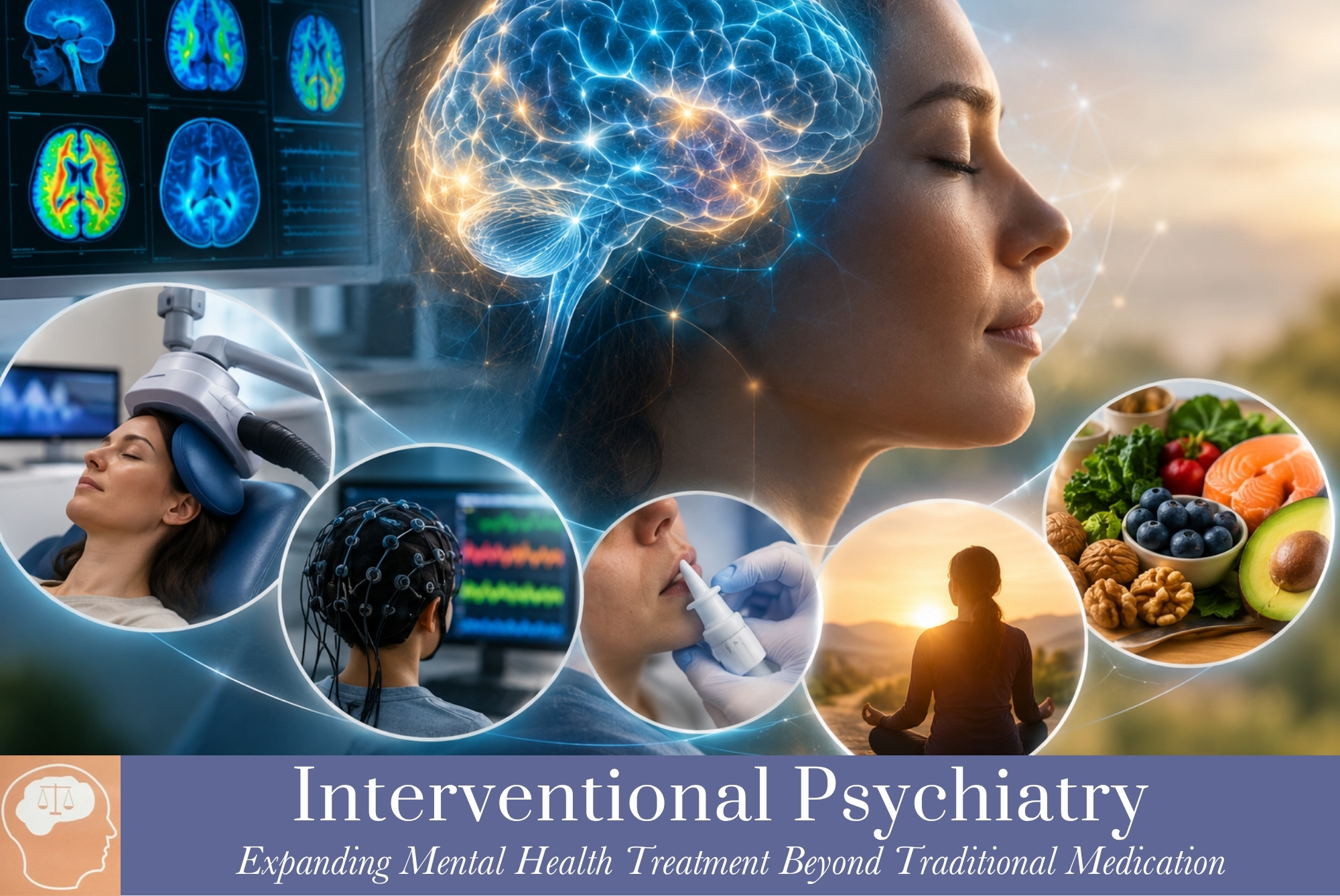
 Mental health treatment is not one-size-fits-all. While psychiatric medications and psychotherapy remain important and effective treatments for many people, advances in psychiatry have created additional ways to evaluate brain function, identify areas of cognitive difficulty, and develop more individualized treatment plans.
Interventional psychiatry represents an evolving area of mental health care that incorporates evidence-based treatments and technologies beyond traditional medication management and talk therapy. Depending on the patient’s diagnosis, symptoms, medical history, previous treatments, and individual needs, options may include transcranial magnetic stimulation (TMS), Spravato® (esketamine), neurofeedback, biofeedback, neuromodulation, nutritional interventions, and other targeted approaches.
At The Potter’s Behavioral Medicine Clinic, our goal is to look beyond symptoms alone. When clinically appropriate, we may incorporate tools such as brain mapping and a battery of cognitive tests to better understand areas of function and difficulty and to establish measurable information that can be followed over time.
What Is Interventional Psychiatry?
Interventional psychiatry is an area of psychiatric care that uses specialized therapeutic approaches to address mental health conditions, particularly when conventional approaches have not provided sufficient relief or when an appropriate patient is interested in exploring alternatives or complements to traditional medication.
Rather than relying exclusively on prescriptions, interventional psychiatry can incorporate techniques that influence brain activity, measure cognitive performance, support self-regulation, or address biological and nutritional factors that may contribute to a patient’s overall mental health.
Moving Beyond a One-Size-Fits-All Approach
Two people with the same psychiatric diagnosis can experience very different symptoms.
For example, patients with attention difficulties may struggle with working memory, processing speed, sustained attention, organization, impulse control, or a combination of these challenges. Likewise, depression can affect sleep, motivation, concentration, energy, memory, appetite, and emotional functioning differently from one patient to another.
A more individualized approach attempts to understand these differences before determining which interventions may be appropriate.
Brain Mapping and Cognitive Testing: Identifying Areas of Concern
An important component of individualized psychiatric care can be obtaining more objective information about how a patient is functioning.
The Potter’s Behavioral Medicine Clinic may utilize brain mapping and a battery of cognitive tests as supportive tools to help identify patterns or areas of deficit that may be relevant to a patient’s symptoms and treatment plan.
What Is Brain Mapping?
The term “brain mapping” can describe techniques used to examine patterns of brain activity and function. Depending on the technology being used, clinicians may be able to evaluate patterns that provide additional information alongside a patient’s clinical history, symptoms, behavioral observations, and other assessments.
Brain mapping should not be viewed as a stand-alone diagnostic test for conditions such as ADHD, autism, anxiety, or depression. Instead, it may provide additional information that helps clinicians develop a more comprehensive picture of an individual’s functioning.
What Can Cognitive Testing Measure?
A battery of cognitive tests may evaluate areas such as:
- Attention and concentration
- Working memory
- Processing speed
- Executive functioning
- Learning and memory
- Problem-solving
- Impulse control
- Other aspects of cognitive performance
The specific testing used depends upon the patient’s symptoms and clinical needs.
This type of evaluation can be particularly useful when symptoms overlap among several conditions or when clinicians want more information about a person’s particular strengths and areas of difficulty.
Measuring Progress Through Repeat Testing
One advantage of establishing baseline measurements is the ability to compare them with future results.
When clinically appropriate, patients may be retested periodically. Comparing results over time can give clinicians additional information about changes in cognitive performance and may help inform treatment decisions.
This measurement-informed approach adds another dimension to psychiatric care: instead of considering only whether a patient reports feeling better, clinicians may also have objective information that can contribute to evaluating progress.
Interventional Psychiatry Treatment Options
The appropriate intervention depends on the individual. A comprehensive psychiatric assessment remains essential because not every treatment is appropriate for every diagnosis or every patient.
The following are among the modalities that may be considered as part of interventional psychiatric care.
Transcranial Magnetic Stimulation (TMS)
Transcranial magnetic stimulation, commonly known as TMS, is a noninvasive form of neuromodulation that uses magnetic pulses to stimulate targeted regions of the brain.
TMS is most established as a treatment for major depressive disorder, particularly for certain patients who have not achieved adequate improvement with antidepressant medications. Certain TMS devices and protocols also have FDA-cleared indications for other conditions.
Unlike treatments requiring general anesthesia, standard TMS sessions are typically performed while the patient is awake. Treatment generally involves multiple sessions over a period of weeks.
A psychiatric evaluation helps determine whether TMS is appropriate based on diagnosis, treatment history, medical factors, and potential contraindications.
Spravato® (Esketamine)
Spravato® is the brand name for esketamine, an FDA-approved prescription nasal spray used under specific circumstances for certain adults with depression.
It works differently from traditional antidepressants by acting primarily through the brain’s glutamate system rather than relying solely on serotonin, norepinephrine, or dopamine pathways.
Spravato is not a medication patients simply take home and administer independently. Because of potential effects such as sedation, dissociation, and changes in blood pressure, it must be administered in a certified healthcare setting with appropriate monitoring and observation.
Careful evaluation is necessary to determine whether a patient meets the appropriate criteria for treatment.
Neurofeedback
Neurofeedback is a form of biofeedback focused specifically on brain activity. Sensors are used to measure brainwave activity, and the patient receives real-time feedback designed to help develop greater awareness and regulation of certain patterns.
Neurofeedback has been studied for conditions and symptoms involving attention, anxiety, sleep, emotional regulation, and other areas of mental functioning. However, the strength of evidence varies depending on the condition being treated.
For this reason, neurofeedback should be considered within the context of an individualized treatment plan rather than presented as a universal replacement for established psychiatric treatment.
Biofeedback
Biofeedback helps patients become more aware of physiological processes that normally occur automatically.
Depending on the type of biofeedback, measurements may include:
- Heart rate
- Breathing patterns
- Muscle tension
- Skin temperature
- Other physiological responses
By receiving real-time information about these processes, patients can practice techniques designed to improve self-regulation.
Biofeedback may be incorporated into treatment for stress-related symptoms, anxiety, relaxation training, and other conditions in which physiological arousal plays an important role.
Neuromodulation
Neuromodulation is a broad term describing interventions designed to alter or regulate nervous-system activity.
TMS is one example of neuromodulation. The larger field continues to evolve as researchers investigate how targeted stimulation of specific brain networks may affect psychiatric and neurological symptoms.
The goal is not simply to “stimulate the brain,” but to identify clinically relevant targets and determine whether an evidence-based intervention is appropriate for the patient’s particular condition.
Nutritional Psychiatry and the Gut-Brain Connection
Mental health does not exist separately from physical health.
An expanding body of research is examining the relationship among nutrition, metabolism, inflammation, the gastrointestinal system, and brain function. This relationship is commonly discussed as part of the “gut-brain connection.”
The gastrointestinal system and brain communicate through several pathways, including neural, immune, endocrine, and metabolic signaling.
Identifying Nutritional Factors That May Affect Mental Health
At The Potter’s Behavioral Medicine Clinic, nutritional factors may be considered as part of a broader evaluation when clinically appropriate.
Potential areas of investigation can include dietary patterns, nutritional deficiencies, food-related concerns, metabolic factors, and other findings that may influence physical and mental functioning.
This may be especially relevant when evaluating concerns involving:
- Attention and cognitive performance
- Depression and mood
- Memory difficulties
- Fatigue
- Food sensitivities
- Overall brain health
Nutritional psychiatry does not mean that food alone causes or cures psychiatric or neurodevelopmental conditions. For example, autism and ADHD are complex neurodevelopmental conditions and should not be reduced to dietary explanations. Rather, nutrition can be one component of comprehensive health that deserves appropriate consideration.
Targeted Nutritional Interventions
When a nutritional deficiency or other relevant concern is identified, targeted interventions may be considered as part of the patient’s broader treatment plan.
The emphasis should be on individualized evaluation rather than assuming that every patient needs the same supplements or dietary changes.
Supplements can interact with medications and may not be appropriate for everyone. Patients should therefore discuss nutritional products and significant dietary interventions with a qualified healthcare professional.
How Interventional Psychiatry Can Complement Traditional Treatment
Interventional psychiatry does not necessarily mean abandoning medication or psychotherapy.
For many patients, the most effective plan may involve a combination of approaches.
Depending on the individual, treatment might include psychotherapy alongside TMS, medication management combined with nutritional interventions, cognitive testing to monitor progress, or behavioral strategies supplemented by biofeedback or neurofeedback.
For appropriately selected patients who are not acutely ill and who prefer to explore non-medication approaches, interventional options can also expand the conversation about available treatment strategies.
The central question is not simply, “Which treatment is best?”
A more useful question is, “Which combination of appropriate treatments best addresses this individual patient’s needs?”
Who May Benefit From an Interventional Psychiatry Evaluation?
An interventional psychiatry consultation may be worth considering for patients who:
- Have experienced limited improvement with previous treatment
- Have experienced problematic medication side effects
- Want to learn whether appropriate non-medication options are available
- Have persistent depression despite conventional treatment
- Experience cognitive concerns involving attention, memory, or executive functioning
- Want a more comprehensive evaluation of their symptoms
- Are interested in measurable ways of monitoring cognitive performance
- May benefit from evaluation of nutritional factors
- Want to understand whether TMS, Spravato, neurofeedback, biofeedback, or another intervention could be appropriate
The availability of a treatment does not automatically make someone a candidate for it. Diagnosis, symptom severity, previous treatment, medications, physical health, and other factors must be considered.
Why Measurement Matters in Mental Health Care
Psychiatry has historically depended heavily on clinical interviews and patient-reported symptoms. These remain essential. A patient’s lived experience cannot be reduced to a number on a test.
However, objective measurement can add useful information.
Brain mapping and cognitive testing may provide supportive data that help clinicians identify areas of concern, establish baselines, and assess changes over time.
When these tools are combined with a comprehensive psychiatric evaluation, clinical history, patient goals, and ongoing monitoring, they can contribute to a more individualized and measurable approach to care.
A More Comprehensive Approach to Mental Health
Modern psychiatric care is expanding.
Medication and psychotherapy remain valuable tools, but they are not the only tools available. Advances in brain-based interventions, neuromodulation, cognitive assessment, and nutritional psychiatry are creating additional opportunities to personalize care.
At The Potter’s Behavioral Medicine Clinic, the goal is to understand the person behind the diagnosis. Brain mapping and cognitive testing can provide additional information about areas of difficulty. Periodic retesting can help evaluate change. Interventional treatments such as TMS, Spravato, neurofeedback, and biofeedback may offer additional options for appropriately selected patients, while nutritional assessment can help identify physical and dietary factors that deserve consideration.
By combining clinical expertise with measurable assessment and an expanding range of treatment modalities, psychiatric care can become more individualized, targeted, and responsive to each patient’s needs.
Frequently Asked Questions About Interventional Psychiatry
Is interventional psychiatry the same as medication management?
No. Medication management may be part of psychiatric treatment, while interventional psychiatry incorporates additional therapeutic approaches such as TMS and other forms of neuromodulation. Depending on the practice and patient’s needs, care may also involve neurofeedback, biofeedback, cognitive assessment, and other complementary approaches.
Can brain mapping diagnose ADHD?
Brain mapping should not be used by itself to diagnose ADHD. ADHD diagnosis requires a comprehensive clinical evaluation. Brain mapping and cognitive testing may provide supportive information about patterns of brain activity or areas of cognitive functioning that can contribute to a broader assessment.
Can brain mapping diagnose autism?
Brain mapping alone does not establish an autism diagnosis. Autism evaluation typically requires developmental and medical history, clinical observation, standardized assessment, and other appropriate evaluations. Cognitive testing and other tools may provide additional information about an individual’s functioning.
Why would cognitive testing be repeated?
Repeat testing can allow clinicians to compare current performance with an established baseline. When clinically appropriate, this may provide additional information about whether certain areas of cognitive functioning have changed over time.
What is the difference between biofeedback and neurofeedback?
Biofeedback is a broad approach that provides information about physiological functions such as heart rate, breathing, or muscle tension. Neurofeedback is a specialized type of biofeedback focused on measured brain activity.
Is TMS a medication?
No. TMS is a noninvasive neuromodulation treatment that uses magnetic pulses to stimulate targeted brain regions. It does not involve taking a psychiatric medication during the treatment itself.
What is Spravato?
Spravato is the brand name for esketamine, an FDA-approved nasal spray used for specific depressive disorders in eligible adults. It is administered under medical supervision in a certified treatment setting, and patients must be monitored after receiving it.
Is Spravato the same as ketamine?
No. Spravato contains esketamine, one of the two mirror-image molecules associated with ketamine. Although related, Spravato and ketamine are not interchangeable treatments and differ in regulatory approval, formulation, administration, and clinical protocols.
Can interventional psychiatry help someone who does not want medication?
Some patients may have appropriate non-medication treatment options. TMS, neurofeedback, biofeedback, psychotherapy, behavioral interventions, and targeted nutritional strategies are examples of approaches that do not necessarily rely on daily psychiatric medication. However, the safest and most appropriate treatment depends on the person’s diagnosis and clinical condition.
What does nutrition have to do with mental health?
The brain and gastrointestinal system communicate through neural, hormonal, immune, and metabolic pathways. Nutritional deficiencies and overall physical health can also affect areas such as energy, cognition, and mood. Nutritional assessment can therefore be relevant to comprehensive psychiatric care, although dietary interventions should not be presented as cures for complex psychiatric or neurodevelopmental disorders.
Can nutritional treatment replace psychiatric care?
Not necessarily. Nutritional interventions may complement psychiatric treatment when clinically appropriate, particularly when a relevant deficiency or nutritional concern is identified. Significant psychiatric symptoms still require appropriate evaluation and evidence-based care.
How do I know which interventional treatment is right for me?
The first step is a comprehensive evaluation. Your diagnosis, symptoms, medical history, previous treatments, medications, cognitive concerns, goals, and potential contraindications all help determine which options may be appropriate.
Contact Information
For more information about interventional psychiatry, brain mapping, cognitive testing, TMS, Spravato, neurofeedback, biofeedback, nutritional psychiatry, or other mental health services, contact The Potter’s Behavioral Medicine Clinic.
Villa Rica
The Potter’s Behavioral Medicine Clinic
307 Old Stone Road
Villa Rica, GA 30180
Phone: (770) 459-8799
Hiram
The Potter’s Behavioral Medicine Clinic
5604 Wendy Bagwell Pkwy
Hiram, GA 30141
Phone: (770) 439-3070
Stockbridge – Virtual Visits
255 Corporate Centre Drive
Stockbridge, GA 30281
Phone: (770) 459-8799
Decatur – Virtual Visits
5322 Snapfinger Park Drive
Decatur, GA 30035
Phone: (770) 459-8799
Website: thepottersclinic.com