
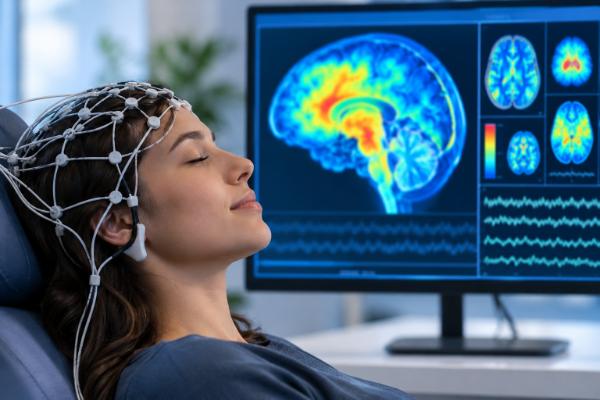
A More Objective Look at How Your Brain Is Functioning
Mental health symptoms can be complex. Difficulty concentrating, changes in mood, anxiety, impulsivity, memory concerns, sleep problems, or changes in everyday functioning may have multiple contributing factors. Understanding the individual patient is an important first step toward developing an effective treatment plan.
At The Potter’s Behavioral Medicine Clinic, brain mapping and objective computerized assessments can provide additional information about brain function and help our providers develop a more individualized approach to mental health care.
Rather than relying on symptoms alone, objective testing can complement a comprehensive psychiatric evaluation and provide measurable information that may be useful when establishing a baseline, evaluating certain areas of cognitive functioning, planning treatment, or monitoring progress over time.
Request an Appointment
What Is Brain Mapping?
Understanding Brain Function Through Objective Assessment
The term brain mapping can refer to different technologies used to evaluate or identify patterns of brain activity or function. The specific type of assessment used depends on the clinical purpose and the technology being utilized.
In behavioral medicine and psychiatry, brain mapping or computerized neurocognitive testing may be used alongside a clinical evaluation to provide additional objective information about areas such as attention, concentration, processing, response control, and other aspects of cognitive performance.
Brain mapping does not replace a psychiatric evaluation or automatically diagnose a mental health disorder. Instead, it can serve as another source of information that a qualified provider considers alongside symptoms, medical history, developmental history, medications, physical health, and other relevant factors.
Why Is Brain Mapping Used?
Moving Beyond Symptoms Alone
Two patients can describe similar symptoms while having very different underlying needs. Likewise, several mental health or neurological conditions can produce overlapping symptoms.
Objective testing may help providers develop a more complete picture of a patient’s functioning.
Depending on the reason for testing, brain mapping and computerized assessments may help with:
- Establishing an objective baseline
- Evaluating attention and concentration
- Assessing certain aspects of cognitive performance
- Identifying patterns that may warrant further evaluation
- Supporting treatment planning
- Tracking changes during treatment
- Evaluating response to certain interventions
- Helping patients and families better understand treatment progress
At The Potter’s Behavioral Medicine Clinic, our goal is not simply to identify symptoms. We strive to understand the whole person and use appropriate diagnostic information to guide individualized care.
Brain Mapping and Mental Health
Adding Objective Information to a Comprehensive Evaluation
Psychiatric diagnoses are based on comprehensive clinical evaluation rather than a single scan or test. However, objective measurements can add valuable information to the overall assessment.
A comprehensive evaluation may consider your:
- Current symptoms
- Medical history
- Mental health history
- Family history
- Developmental history
- Medications and supplements
- Sleep patterns
- School or work performance
- Emotional and behavioral functioning
- Physical health
- Substance use when relevant
- Results from appropriate computerized or objective testing
Bringing these pieces together helps providers make thoughtful clinical decisions rather than relying on one piece of information in isolation.
Brain Mapping for ADHD and Attention Concerns
Understanding Attention and Executive Function
Attention-deficit/hyperactivity disorder (ADHD) can affect attention, organization, impulse control, activity levels, and executive functioning.
Because many people occasionally experience distraction, forgetfulness, restlessness, or difficulty concentrating, diagnosing ADHD requires a comprehensive evaluation.
Objective computerized testing may provide additional information about attention and behavioral performance. The results can then be considered together with the patient’s symptoms, history, and clinical evaluation.
For patients already receiving treatment, repeat objective assessments may also provide another way to evaluate changes over time.
Brain Mapping and TMS Therapy
Helping Personalize Brain Stimulation Treatment
Brain mapping can also have a specific role in transcranial magnetic stimulation (TMS) therapy.
TMS is a noninvasive treatment that uses magnetic pulses to stimulate targeted areas of the brain. Before treatment begins, mapping procedures can help the clinical team identify the appropriate treatment location and determine individualized stimulation settings.
Because each patient is different, this preparation is an important part of personalizing TMS treatment.
The Potter’s Behavioral Medicine Clinic offers TMS as an option for appropriate patients, including some individuals with depression who have not experienced adequate improvement with traditional treatments.
Can Brain Mapping Track Treatment Progress?
Creating Measurable Points of Comparison
Mental health improvement is often evaluated through changes in symptoms and everyday functioning. Patients may notice that they are sleeping better, concentrating more effectively, feeling less anxious, functioning better at work or school, or experiencing improved mood.
Objective testing can provide another point of comparison.
Establishing a baseline before or during treatment may allow providers to compare later results with earlier measurements. This can help create a more comprehensive picture of progress.
Treatment decisions are never based solely on a computerized result. Your provider considers test findings together with your clinical response, symptoms, functioning, side effects, and overall health.
What Happens During a Brain Mapping or Computerized Assessment?
A Comfortable, Noninvasive Evaluation
The exact process depends on the type of testing recommended and why it is being performed.
Your provider will explain the assessment and what information they hope to obtain. Depending on the technology being used, you may complete computerized activities designed to measure specific aspects of cognitive performance or undergo a mapping procedure associated with another treatment, such as TMS.
Afterward, your provider can review the relevant findings with you and explain how they relate to the broader clinical assessment.
Patients and parents are encouraged to ask questions. Understanding why testing is being performed and how the results will be used is an important part of informed mental health care.
Who May Benefit From Brain Mapping?
Individualized Testing Based on Clinical Need
Brain mapping or objective computerized testing may be considered for certain children, adolescents, or adults when additional information could be useful for evaluation or treatment planning.
Depending on the type of assessment available and the patient’s individual circumstances, testing may be considered when evaluating concerns involving:
- Attention and concentration
- ADHD symptoms
- Cognitive performance
- Behavioral changes
- Treatment response
- TMS treatment planning
- Changes in functioning over time
Not everyone needs brain mapping. Your provider can determine whether objective testing is appropriate based on your symptoms, history, and treatment goals.
The Benefits of Objective Mental Health Testing
Information That Complements Personalized Care
One of the challenges in mental health care is that many symptoms cannot be measured through a standard blood test or physical examination.
Objective testing provides another source of information.
Potential advantages include establishing measurable baseline data, providing additional information for treatment planning, helping patients understand aspects of their cognitive performance, and allowing certain measurements to be compared over time.
The most useful approach combines this objective information with experienced clinical judgment and ongoing communication between the patient and provider.
A Whole-Person Approach to Brain and Mental Health
Science, Compassion, and Individualized Treatment
At The Potter’s Behavioral Medicine Clinic, we recognize that mental health involves more than a diagnosis.
Emotional well-being can be influenced by brain function, physical health, relationships, life experiences, trauma, stress, sleep, nutrition, medications, environment, and other factors.
Our team takes a comprehensive approach to mental health care, using appropriate clinical and objective information to better understand each patient’s individual needs.
Depending on the diagnosis and treatment goals, care may include psychiatric evaluation, medication management, psychotherapy, biofeedback, TMS therapy, lifestyle recommendations, and other appropriate interventions.
The goal is to develop a treatment strategy that supports meaningful improvement in everyday life.
Frequently Asked Questions About Brain Mapping
Is brain mapping painful?
Brain mapping and computerized cognitive assessments are generally noninvasive. What you experience will depend on the specific technology or assessment being performed. Your provider will explain the process beforehand.
Can brain mapping diagnose ADHD?
Brain mapping or computerized testing should not be used by itself to diagnose ADHD. ADHD diagnosis requires a comprehensive clinical evaluation. Objective testing may provide additional information that helps your provider evaluate attention and behavioral functioning.
Can brain mapping diagnose depression or anxiety?
No single brain mapping test independently establishes a diagnosis of depression or an anxiety disorder. These conditions are diagnosed through a comprehensive evaluation. Objective testing may provide supplementary information when clinically appropriate.
Is brain mapping the same as an MRI?
No. An MRI primarily provides detailed images of the physical structures of the brain. Brain mapping is a broader term that may describe techniques used to evaluate or identify aspects of brain activity, cognitive performance, or functional targets depending on the technology and clinical purpose.
Why is brain mapping used before TMS?
During TMS treatment planning, mapping helps the clinical team determine appropriate treatment positioning and individualized stimulation settings.
Can children undergo objective brain-function testing?
Certain computerized assessments may be appropriate for children and adolescents. The provider determines whether testing is suitable based on the child’s age, symptoms, developmental history, and reason for evaluation.
Can testing show whether treatment is working?
Repeat objective testing may provide measurable information that can be compared with previous results. Providers also consider symptom improvement, daily functioning, side effects, patient feedback, and other clinical information when evaluating treatment effectiveness.
Does everyone receiving psychiatric care need brain mapping?
No. Testing should be recommended when a provider believes it may provide useful information for diagnosis, treatment planning, or monitoring. Many patients can be appropriately evaluated and treated without brain mapping.
Will brain mapping replace talking with my psychiatrist or mental health provider?
No. Technology is a tool, not a replacement for clinical expertise or the patient-provider relationship. Your symptoms, experiences, concerns, medical history, and treatment goals remain essential components of your care.
Discover a More Personalized Approach to Mental Health Care
When mental health symptoms interfere with school, work, relationships, or everyday life, a thorough evaluation can help determine the next steps.
The Potter’s Behavioral Medicine Clinic combines comprehensive psychiatric care with modern diagnostic and treatment approaches to help patients better understand their mental health and pursue individualized treatment.
If you would like to learn whether brain mapping, computerized objective testing, or another form of evaluation may be appropriate for you or your child, contact The Potter’s Behavioral Medicine Clinic to schedule an appointment.
Contact The Potter’s Behavioral Medicine Clinic
The Potter’s Behavioral Medicine Clinic provides mental health care in Villa Rica, Hiram, Stockbridge, and Decatur, Georgia, with telepsychiatry services also available for appropriate appointments.
Visit the website to request an appointment or select the clinic location most convenient for you.
Request an Appointment