
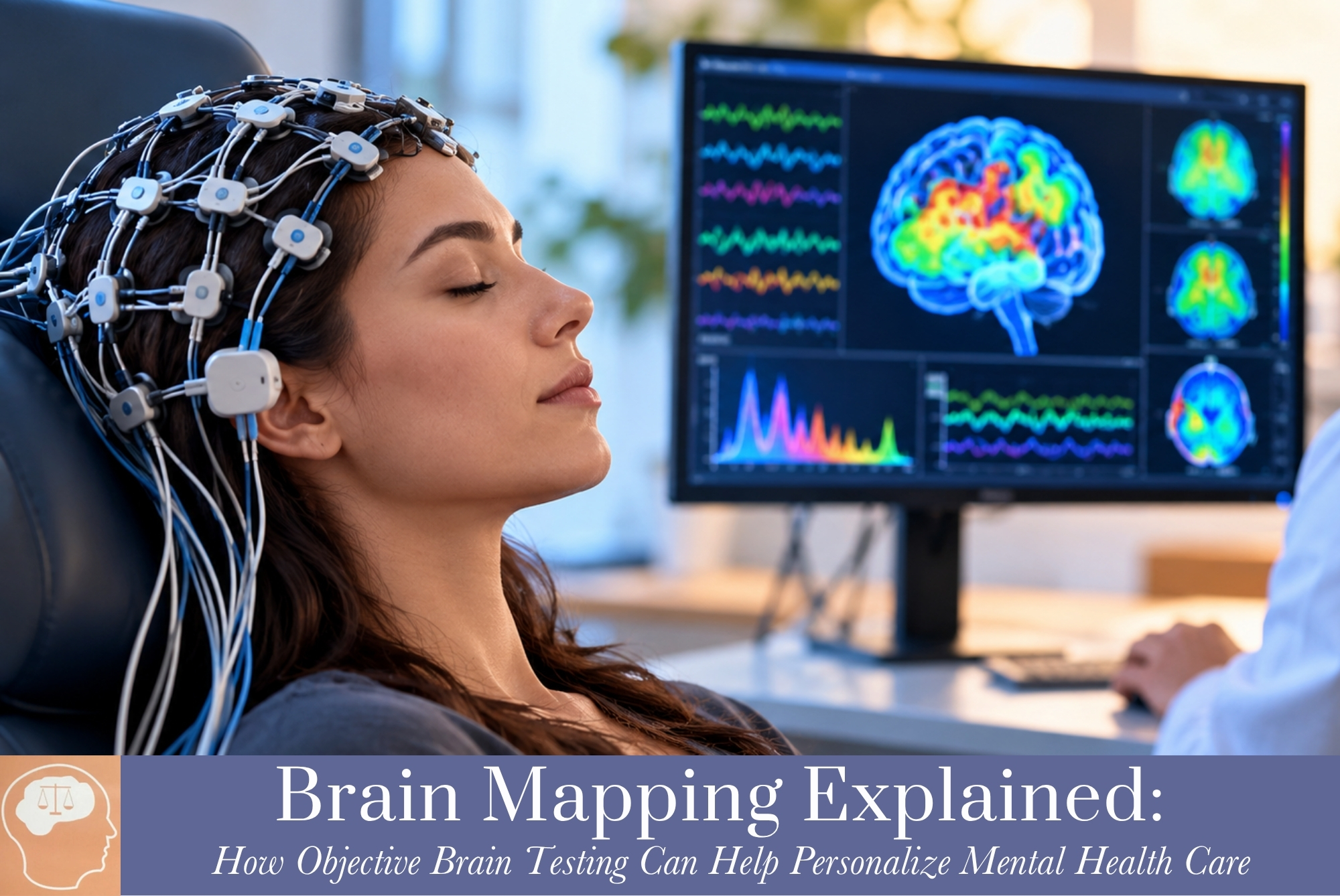
 Mental health care has traditionally relied on clinical interviews, medical history, symptom patterns, behavioral observations, and validated psychological assessments. These remain essential parts of psychiatric evaluation. However, advances in technology have introduced additional tools that may provide clinicians with objective information about brain activity.
One such approach is commonly called brain mapping. Depending on the technology used, brain mapping can measure patterns of electrical activity and organize the information into visual or quantitative data that clinicians may consider alongside a patient’s symptoms and clinical history.
At The Potter’s Behavioral Medicine Clinic, individualized mental health care begins with understanding the whole person. When clinically appropriate, objective testing may provide another source of information that can complement—not replace—a comprehensive psychiatric evaluation.
What Is Brain Mapping?
Understanding the Basic Concept
“Brain mapping” is a broad term that can refer to several methods of measuring or visualizing aspects of brain structure or function. In behavioral health settings, the term often refers to quantitative electroencephalography (qEEG) or related EEG-based assessments.
An EEG uses sensors placed on the scalp to detect electrical activity generated by the brain. A qEEG applies mathematical analysis to EEG data and may compare certain measurements with reference databases. The resulting information can be displayed in maps, graphs, or other visual formats.
These findings can help qualified clinicians examine patterns of brain activity, but they should always be interpreted within the larger clinical picture.
How Does Brain Mapping Work?
Measuring Electrical Brain Activity
During an EEG-based brain mapping assessment, sensors are typically positioned at standardized locations on the scalp. The sensors detect electrical signals; they do not send electricity into the brain.
Recordings may be obtained under different conditions, such as while the patient is resting with their eyes open or closed. Depending on the specific protocol, additional tasks may also be used.
Computer software can then analyze characteristics of the recorded activity, including the relative activity within different frequency ranges and relationships between signals recorded from different areas.
Creating a Visual Representation
The analyzed information may be displayed as color-coded maps, graphs, or numerical measurements. These representations can make certain patterns easier for trained professionals to examine.
It is important to understand that a brain map is not a photograph of thoughts, emotions, memories, or a psychiatric disorder. It is a representation of measured physiological activity interpreted within the limitations of the technology being used.
What Can Brain Mapping Potentially Reveal?
Patterns of Brain Activity
Depending on the type of testing performed, brain mapping may provide information about patterns such as relative electrical activity in different frequency bands, differences between regions, or relationships among recorded signals.
Clinicians may consider whether particular findings correspond with concerns involving attention, sleep, cognitive performance, emotional regulation, or other symptoms.
However, patterns identified through qEEG or other brain-mapping techniques are not necessarily unique to a single psychiatric condition. Similar findings may occur in people with different symptoms or diagnoses, and individual differences are common.
For this reason, brain mapping should not be interpreted in isolation.
Can Brain Mapping Diagnose a Mental Health Disorder?
Objective Data Does Not Replace a Psychiatric Evaluation
A brain map alone generally cannot establish a psychiatric diagnosis such as depression, anxiety, ADHD, bipolar disorder, or post-traumatic stress disorder.
Mental health diagnoses require clinicians to consider multiple sources of information. Depending on the patient’s circumstances, an evaluation may include symptoms, duration and severity, medical history, medications, substance use, sleep, family history, psychosocial factors, functional impairment, physical health, and standardized assessments.
Brain mapping, when appropriate, may add physiological information to this broader evaluation.
Why Clinical Context Matters
An abnormal or unusual measurement does not automatically mean that a person has a psychiatric disorder. Likewise, a measurement that falls within a reference range does not necessarily mean that a person has no mental health concerns.
Sleep deprivation, medications, caffeine, substances, neurological conditions, movement during testing, and other factors can potentially affect EEG recordings.
Interpretation therefore requires appropriate training and careful consideration of the patient’s overall health and clinical presentation.
How Can Objective Testing Support Personalized Mental Health Care?
Looking Beyond Symptoms Alone
Two people can describe similar symptoms while having very different histories, contributing factors, medical conditions, and treatment needs.
For example, difficulty concentrating can occur with ADHD, anxiety, depression, sleep disorders, medication effects, substance use, significant stress, and certain medical conditions. Fatigue, irritability, and sleep disturbances can likewise occur across numerous conditions.
A thorough evaluation helps clinicians investigate these possibilities rather than assuming that one symptom automatically indicates one diagnosis.
Adding Another Piece to the Clinical Puzzle
When brain mapping is clinically appropriate, objective physiological information may provide another piece of data for clinicians to consider.
The goal is not simply to generate a brain map. The value comes from integrating testing results with the patient’s symptoms, history, examination, and other relevant information.
This integrated approach may help clinicians develop a more individualized understanding of the patient’s needs.
What Are the Potential Benefits of Brain Mapping?
Objective Physiological Information
Psychiatric symptoms are often subjective by nature. Patients describe what they experience, and clinicians evaluate those experiences using established diagnostic methods.
Objective testing may add measurable physiological data to that process.
Greater Individualization
Mental health disorders do not always look the same from one person to another. Additional information may help clinicians better characterize an individual’s presentation and consider treatment options within the context of that person’s specific needs.
Tracking Information Over Time
In some clinical settings, repeat testing may be used to examine whether measured patterns change over time. Whether repeat testing is appropriate depends on the reason for testing, the technology used, and the clinician’s judgment.
Supporting Patient Education
Seeing visual representations of measured brain activity may also help some patients better understand the purpose of testing and why individualized evaluation is important.
What Are the Limitations of Brain Mapping?
Brain Mapping Is Not a Standalone Answer
Objective technology can sound definitive, but psychiatric care is complex. No single scan, questionnaire, laboratory test, or brain map provides every answer about a person’s mental health.
Brain mapping should therefore be viewed as a potential complementary assessment tool, not a substitute for professional psychiatric evaluation.
Research Is Continuing to Evolve
Research involving EEG, qEEG, neuroimaging, biomarkers, and other objective approaches to mental health assessment continues to develop. Some applications have stronger evidence than others, and the clinical usefulness of a particular technique can vary depending on the condition being evaluated and how the information will be used.
Patients should feel comfortable asking why a particular test is being recommended, what information it is expected to provide, what its limitations are, and whether the results are likely to influence clinical decision-making.
How Is Brain Mapping Different From an MRI or CT Scan?
Functional Information Versus Structural Imaging
EEG-based brain mapping and structural imaging tests measure different things.
An MRI or CT scan primarily provides information about the physical structures of the brain and may be used to identify certain anatomical abnormalities or medical problems.
EEG-based testing measures electrical activity over time. qEEG uses computational methods to further analyze that activity.
One type of test does not automatically replace another. The appropriate evaluation depends on the patient’s symptoms, medical history, and clinical circumstances.
What Happens After Brain Mapping?
Reviewing the Results
After testing, a qualified clinician may review the quality of the recording, examine relevant findings, and consider how those findings relate to the patient’s overall clinical presentation.
The results should be explained in understandable terms, including what can—and cannot—reasonably be concluded from them.
Integrating Findings With Psychiatric Evaluation
Brain mapping is most useful when interpreted as part of a larger assessment. A clinician may consider the results alongside psychiatric history, current symptoms, medications, medical conditions, previous treatment responses, sleep patterns, substance use, family history, and other relevant factors.
Developing an Individualized Treatment Plan
Treatment recommendations depend on the individual. Depending on the diagnosis and circumstances, a personalized plan may involve medication management, psychotherapy, behavioral interventions, lifestyle modifications, treatment of contributing medical issues, or other appropriate therapies.
Objective testing does not automatically determine which treatment a patient should receive. Rather, it may contribute information that clinicians can consider during shared clinical decision-making.
Why Personalized Psychiatry Matters
The Same Diagnosis Can Affect People Differently
Psychiatric diagnoses describe recognizable patterns of symptoms, but they do not mean every patient has the same experience.
People with the same diagnosis may differ in symptom severity, medical history, genetics, sleep, stress exposure, medication response, co-occurring conditions, and personal circumstances.
Personalized psychiatric care recognizes these differences.
Combining Technology With Clinical Expertise
Technology can provide useful information, but effective behavioral health care still depends heavily on skilled clinical evaluation and an ongoing therapeutic relationship.
The most responsible use of objective testing is generally as part of a broader evidence-informed approach rather than as a replacement for clinical judgment.
At The Potter’s Behavioral Medicine Clinic, patients can discuss whether additional assessments, including available objective testing, may be appropriate for their individual situation.
Frequently Asked Questions About Brain Mapping
Is brain mapping painful?
EEG-based brain mapping is generally noninvasive. Sensors are placed on the scalp to record electrical activity. They detect signals rather than delivering electricity into the brain.
Does brain mapping read your thoughts?
No. EEG and qEEG technology measure electrical activity associated with brain function. They cannot read a person’s private thoughts, memories, or intentions.
Can brain mapping tell me exactly what mental health condition I have?
Not by itself. Psychiatric diagnoses require comprehensive clinical evaluation. Brain mapping may provide supplementary information, but results need to be interpreted alongside symptoms, history, and other relevant clinical findings.
Can brain mapping detect ADHD?
EEG research has identified brain-activity patterns associated with attention and cognitive processing, but these findings are not unique to ADHD. A comprehensive ADHD assessment generally requires evaluation of symptoms, developmental history, functioning, and possible alternative explanations.
Can brain mapping detect anxiety or depression?
Certain EEG patterns have been studied in relation to anxiety and depressive disorders, but brain mapping alone should not be used to conclude that someone has either condition. Clinical evaluation remains essential.
Can brain mapping help with medication decisions?
Objective information may sometimes contribute to a clinician’s broader understanding of a patient, but brain mapping should not be viewed as a simple test that identifies the “right” psychiatric medication. Medication decisions typically depend on diagnosis, symptoms, medical history, previous responses, side effects, potential interactions, patient preferences, and other factors.
Is brain mapping the same as a brain scan?
Not necessarily. “Brain scan” often refers to imaging such as MRI, CT, PET, or SPECT. EEG-based brain mapping measures electrical activity rather than producing a structural image of the brain.
Do I need to prepare for brain mapping?
Preparation depends on the type of testing and the clinic’s protocol. Patients may receive instructions concerning hair products, caffeine, medications, sleep, or other factors that could influence the recording. Patients should follow the specific instructions provided by their clinical team and should not stop prescribed medications unless instructed by an appropriate healthcare professional.
Is brain mapping safe?
EEG-based recording is generally considered noninvasive because the electrodes record electrical signals rather than sending electricity into the brain. Patients should still discuss any questions about a particular test with their healthcare provider.
How long does brain mapping take?
The length of an appointment varies according to the testing protocol, preparation requirements, recording conditions, and whether additional assessments are performed. The clinic can provide more specific information when scheduling.
Will everyone who receives psychiatric care need brain mapping?
No. The need for additional objective testing depends on the patient’s circumstances and the clinician’s assessment. Many psychiatric conditions can be evaluated and treated without brain mapping.
What questions should I ask before having brain mapping performed?
Patients may want to ask what type of brain mapping is being used, why it is being recommended, what information the test can provide, its limitations, who will interpret the results, and how the findings might affect treatment recommendations.
A More Individualized Approach to Mental Health Evaluation
Mental health is influenced by a complex interaction of biological, psychological, medical, environmental, and social factors. No single measurement can capture every aspect of an individual’s mental health.
Brain mapping and other objective assessments may provide valuable additional information in selected circumstances, particularly when clinicians integrate those findings with a thorough psychiatric evaluation.
For patients interested in learning whether brain mapping or other advanced assessment options may be appropriate, The Potter’s Behavioral Medicine Clinic can provide individualized evaluation and discuss available approaches based on each patient’s needs.
Contact Information
Villa Rica
The Potter’s Behavioral Medicine Clinic
307 Old Stone Road
Villa Rica, GA 30180
Phone: (770) 459-8799
Hiram
The Potter’s Behavioral Medicine Clinic
5604 Wendy Bagwell Pkwy
Hiram, GA 30141
Phone: (770) 439-3070
Stockbridge – Virtual Visits
255 Corporate Centre Drive
Stockbridge, GA 30281
Phone: (770) 459-8799
Decatur – Virtual Visits
5322 Snapfinger Park Drive
Decatur, GA 30035
Phone: (770) 459-8799
Website: thepottersclinic.com